


AI data collection now depends on infrastructure that can support stable scraping, controlled routing, and recurring automation across multiple targets. AI systems continuously collect product data, search results, reviews, social media signals, and public web content, which makes request distribution and session stability critical for long-running workflows.
According to IBM, 45% of organizations name data accuracy or bias as a major AI adoption challenge, while 42% report insufficient proprietary data for customizing generative AI models. These barriers show why AI teams need a reliable data collection infrastructure for scraping, RAG pipelines, and automated retrieval workflows. Proxy quality directly affects access stability, geo-targeting accuracy, session continuity, and large-scale request distribution.
What Are Proxies for AI Data Collection?
Proxies for AI data collection route scraping traffic through external IP addresses so AI systems can access public web data across different locations, sessions, and workflows without concentrating requests on one endpoint.
They help distribute automated requests during recurring collection tasks for search results, reviews, prices, product listings, marketplace data, and regional content. AI teams use them for LLM training datasets, RAG data refreshes, geo-specific SERP checks, and country-level marketplace monitoring.
Why Do AI Data Teams Need Proxies?
AI data teams need proxies because recurring scraping creates large request volumes across many targets, locations, and automation workflows. Strong proxy infrastructure improves stability, lowers request concentration, and keeps collection pipelines running more predictably.
- Large-Scale Data Access: AI systems often collect data from thousands of pages, marketplaces, and search environments at the same time.
- Web Scraping Stability: Stable routing reduces interruptions during recurring scraping and automation workflows.
- Geo-Specific Datasets: Localized IP routing helps collect country-specific search results, prices, reviews, and marketplace data.
- Lower Block Rates: Distributed requests reduce repetitive access patterns that trigger anti-bot systems.
- Cleaner Request Distribution: Rotating traffic across multiple IPs prevents concentration on a single endpoint.
- Stable Automation Workflows: AI pipelines work more consistently when scraping systems maintain predictable sessions and routing behavior.
Which Proxy Types Work Best for AI Scraping?
Different proxy types support different AI scraping conditions depending on request volume, workflow length, target sensitivity, and session requirements. Most AI teams combine several proxy types when one workflow needs scale, another needs trust, and another needs speed.
Residential Proxies
Residential proxies use real home IPs and fit most AI scraping, RAG retrieval, SERP collection, and market monitoring workflows. Their residential identity improves trust and lowers detection risk during recurring data collection. Live Proxies describes rotating residential proxies as real home IPs that can change through ISP updates, router restarts, or peer replacement.
Mobile Proxies
Mobile proxies route traffic through carrier networks like 3G, 4G, and 5G. They fit stricter anti-bot environments, mobile app scraping, social media automation, and mobile-sensitive targets where carrier IPs appear more natural. Live Proxies notes that mobile proxies use telecom carrier IPs and can rotate automatically at set intervals or on request.
Datacenter Proxies
Datacenter proxies focus on speed, lower cost, and predictable infrastructure. They fit high-volume scraping tasks where throughput matters more than residential IP reputation. These proxies work best for less sensitive targets, bulk crawling, internal testing, and workflows that need fast request handling.
ISP Proxies
ISP proxies combine datacenter infrastructure with ISP-routed IPs. They support workflows that need stronger identity stability, together with lower latency and faster request handling. This makes them useful for repeated access, account checks, and scraping tasks where frequent IP changes may break continuity.
Rotating Proxies
Rotating proxies continuously refresh IP addresses during scraping workflows. This helps distribute requests across larger IP pools and reduces repetitive traffic patterns. They are useful for AI data collection systems that run recurring queries, scrape many URLs, or refresh datasets across many sources.
Which Features Matter Most?
The strongest AI scraping proxies combine routing quality, stable sessions, flexible rotation, and scalable automation support. A large IP pool helps, but scraping reliability also depends on how well the provider controls sessions, targeting, traffic, and integration.
- IP Quality: Clean residential and carrier IPs reduce failed requests, improve scraping consistency, and help AI systems maintain more stable recurring collection workflows.
- Rotation Control: Flexible rotation settings help distribute requests naturally across recurring scraping tasks, larger datasets, and automation pipelines.
- Sticky Sessions: Long sessions support multi-step scraping tasks, AI browsing agents, account workflows, and repeated validation checks.
- Geo-Targeting: Country, city, ZIP, ASN, and ISP targeting improve localized data collection accuracy across search engines, marketplaces, and regional platforms.
- API Integrations: API-ready infrastructure supports automation tools, crawlers, AI pipelines, and recurring retrieval systems without complex manual setup.
Where Do the Best Private Proxies Add the Most Value?
The best private proxies are most useful when AI scraping workflows need stronger route separation, cleaner session control, and predictable access across repeated targets. They are especially useful for recurring collection systems that revisit the same SERPs, marketplaces, review platforms, or regional datasets.
Lower IP Overlap
Dedicated routing helps separate scraping tasks across repeated targets and workflows. This reduces route conflicts when several AI pipelines collect data at the same time, revisit the same sources regularly, or run parallel collection tasks across similar platforms and recurring scraping environments.
Cleaner Sessions
Stable private sessions support AI agents, RAG retrieval systems, and longer automation tasks. They help multi-step workflows keep continuity when systems need repeated access to one source, account flow, or regional dataset without resetting the route too often during extended automation cycles.
Better Geo-Targeting
Private residential and mobile IPs improve localized scraping accuracy across countries, cities, and market segments. This helps AI systems compare SERPs, prices, ads, reviews, and regional public data with fewer location mismatches or inconsistent local results across target markets.
Higher Workflow Stability
Controlled routing reduces interruptions during scheduled scraping, dataset refreshes, and long-running automation workflows. This helps AI pipelines run more consistently when teams collect data at scale, monitor changes, or refresh datasets on a recurring schedule across multiple sources.
How Do the Best AI Scraping Proxies Compare?
AI scraping proxies differ by proxy type, session control, geo-targeting depth, API support, and entry pricing. The table below keeps the comparison focused on criteria that matter most for recurring AI data collection and scraping workflows.
Related Posts
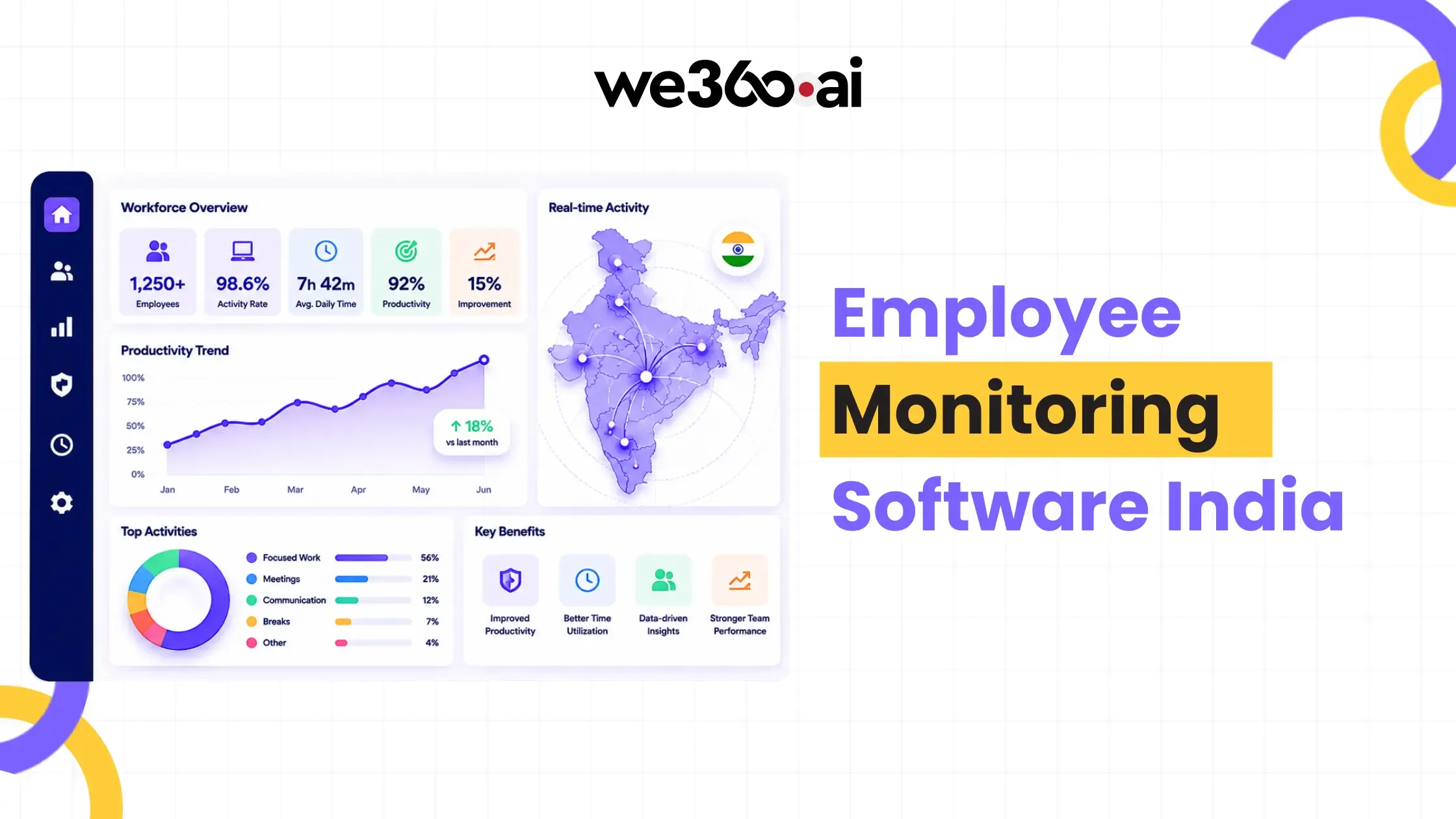
We360.ai replaces guesswork with a single source of truth for workforce activity. Operations and HR leaders get real-time visibility into attendance, applications, websites, and field locations without playing detective. The platform is built India-first, with consent prompts, role-based access, and audit logs that map cleanly to local regulations.
Explore the 12 best automation tools to simplify workflows, reduce manual work, improve collaboration, and increase productivity across teams and business operations.